
Culturally and community relevant physical activity (PA) is a promising area for health promotion from a strength-based perspective for many reasons. Promoting and supporting activities of known importance and value in communities, including the PA they prefer and in many cases already engage in, can improve individual health, reduce health risk, and increase collective well-being across a number of dimensions.
Health promotion that supports community assets, values, history, and strengths is an important way to build health equity.
Strengths-based approaches are vital for supporting health equity for Native Hawaiian and other Pacific Islander communities. We celebrate those who are doing this important work in research, practice, funding, infrastructure, and collaboration.
Surveillance
Culturally Relevant Physical Activity in the Behavioral Risk Factor Surveillance System in Hawai‘i
About the article
Introduction
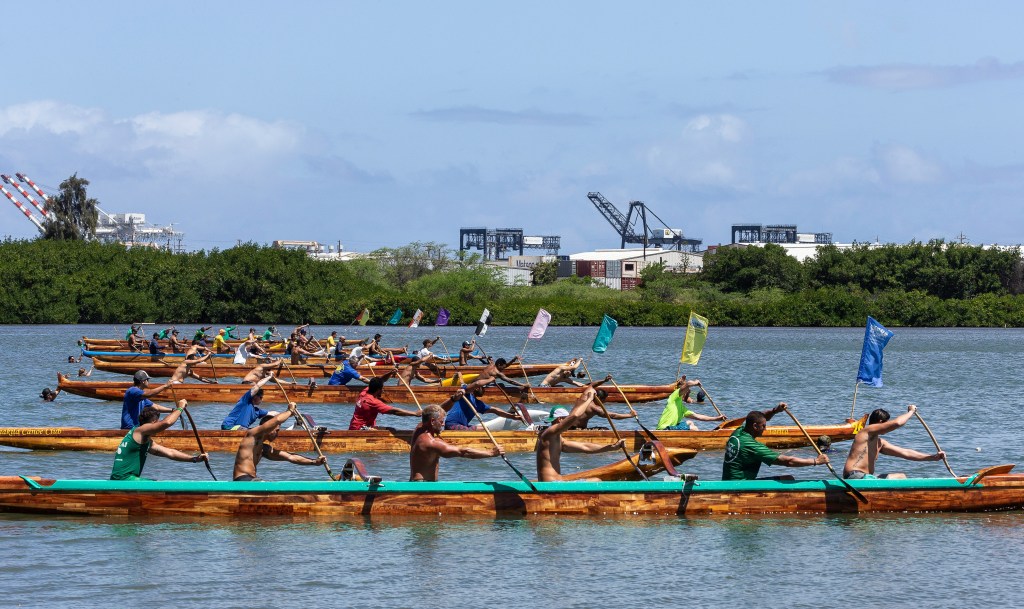
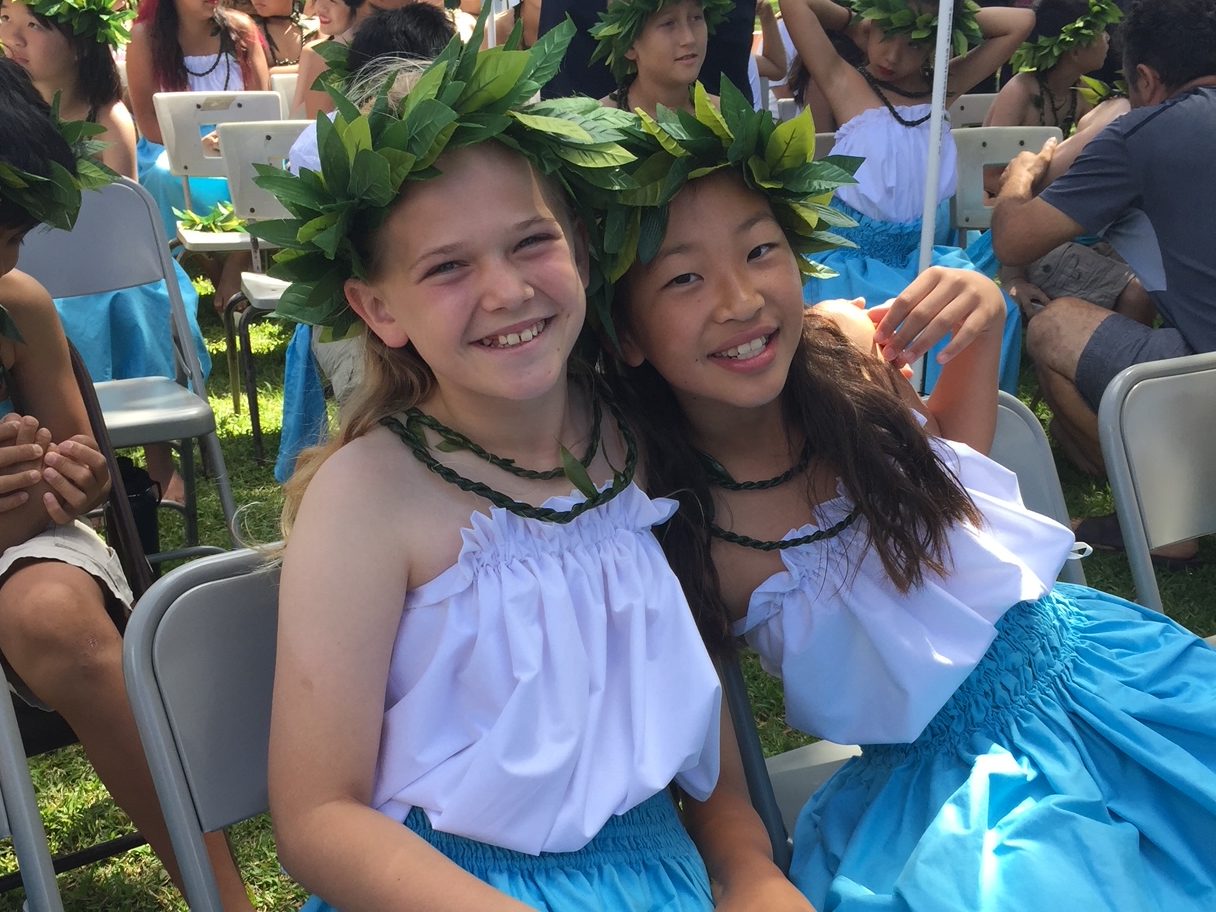
Culturally relevant physical activity is a promising field for chronic disease prevention and management. Native Hawaiians and Other Pacific Islanders have higher rates of physical inactivity than other racial or ethnic groups and increased risk of chronic disease. The study objective was to provide population-level data from Hawai‘i on lifetime experiences in the Native Hawaiian Indigenous practices of hula and outrigger canoe paddling across demographic and health factors to identify opportunities for public health intervention, engagement, and surveillance.
Methods
Questions about hula and paddling were added to the Hawai‘i 2018 and 2019 Behavioral Risk Factor Surveillance System (N = 13,548). We considered level of engagement by demographic categories and health status indicators, accounting for the complex survey design.
Results
Overall, 24.5% of adults engaged in hula and 19.8% in paddling in their lifetime. Prevalence of engagement was higher among Native Hawaiians (48.8% hula, 41.5% paddling) and Other Pacific Islanders (35.3% hula, 31.1% paddling) than among other racial and ethnic groups. In adjusted rate ratios, experience in these activities was strong across age groups, education, sex, and income levels, particularly among Native Hawaiians and Other Pacific Islanders.
Conclusion
Throughout Hawaiʻi, hula and outrigger canoe paddling are important and popular cultural practices with high physical activity demands. Participation was notably high for Native Hawaiians and Other Pacific Islanders. Surveillance information around culturally relevant physical activities can benefit public health programming and research from a strength-based community perspective.
Paddling
Hula
Spearfishing
Activities


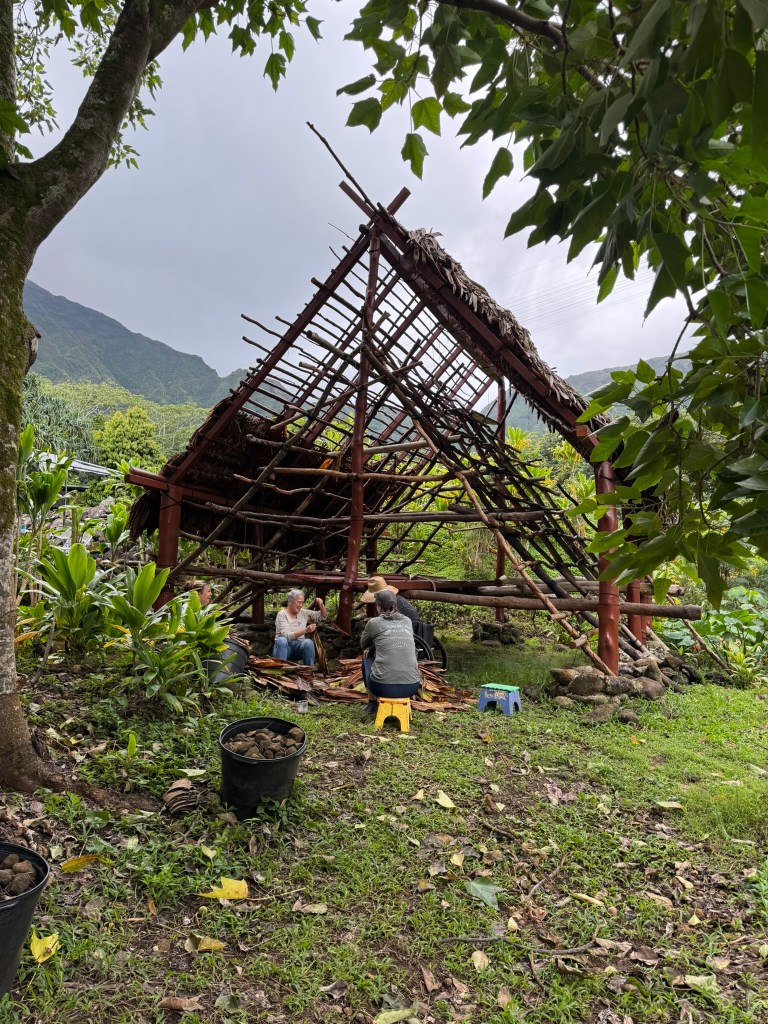
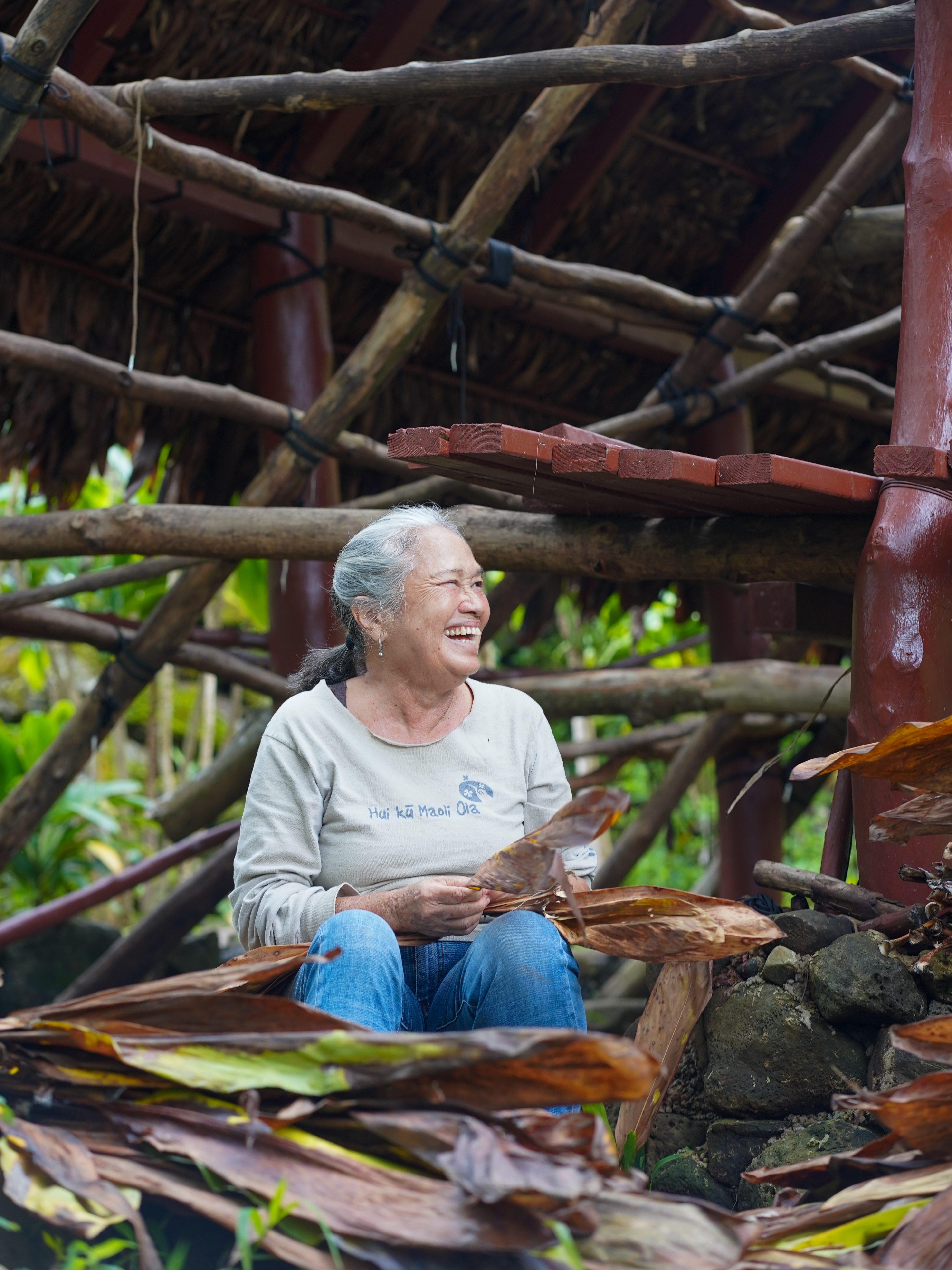
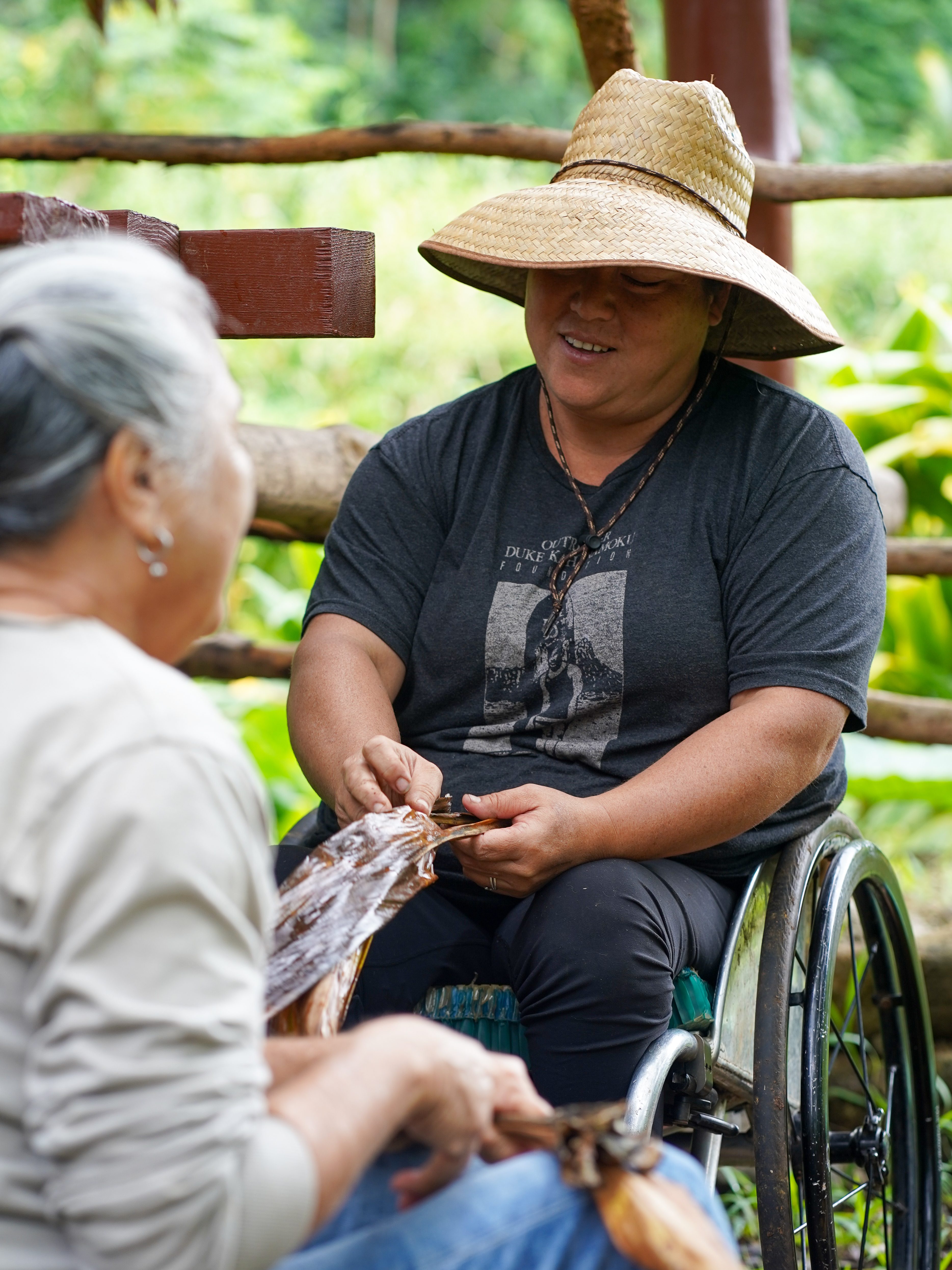
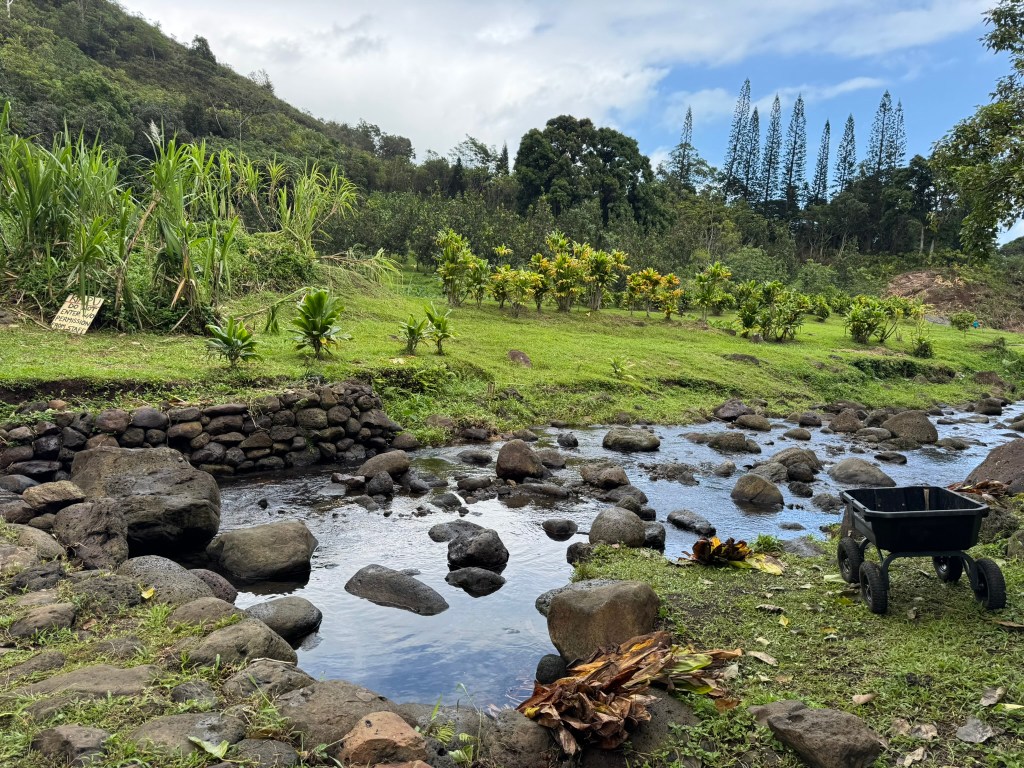



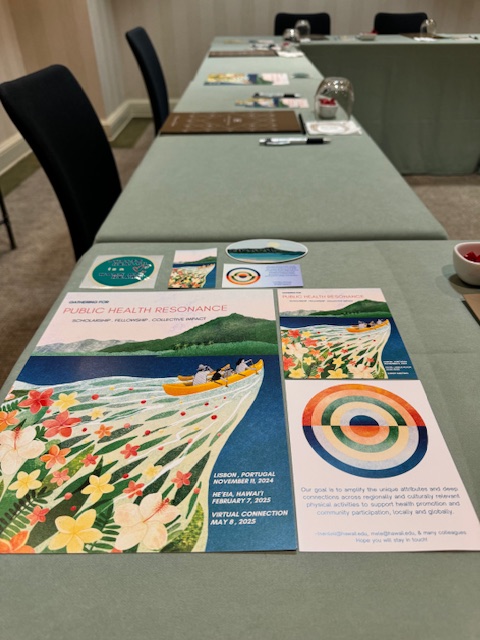
Public Health Resonance Project Event 2025
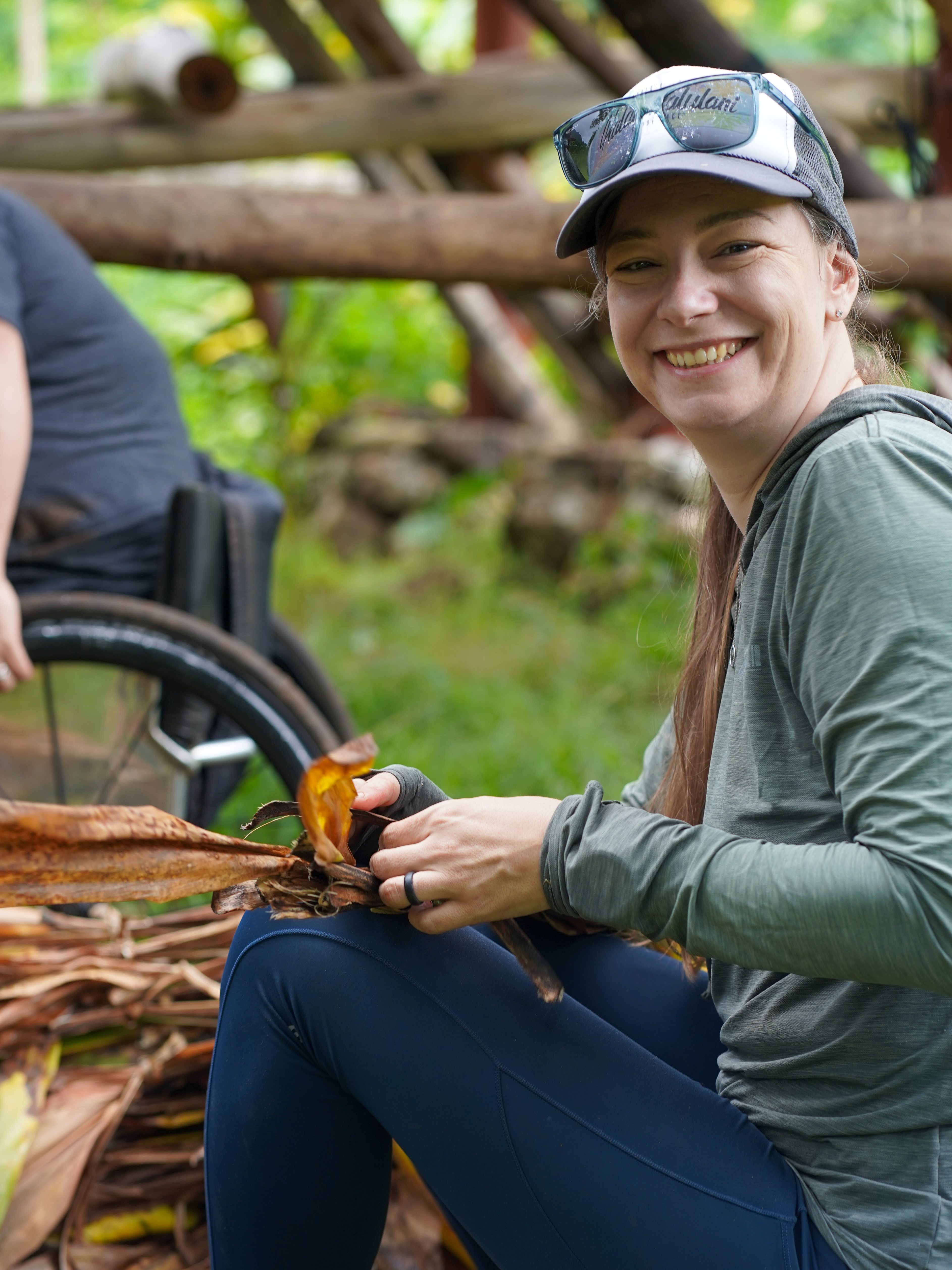
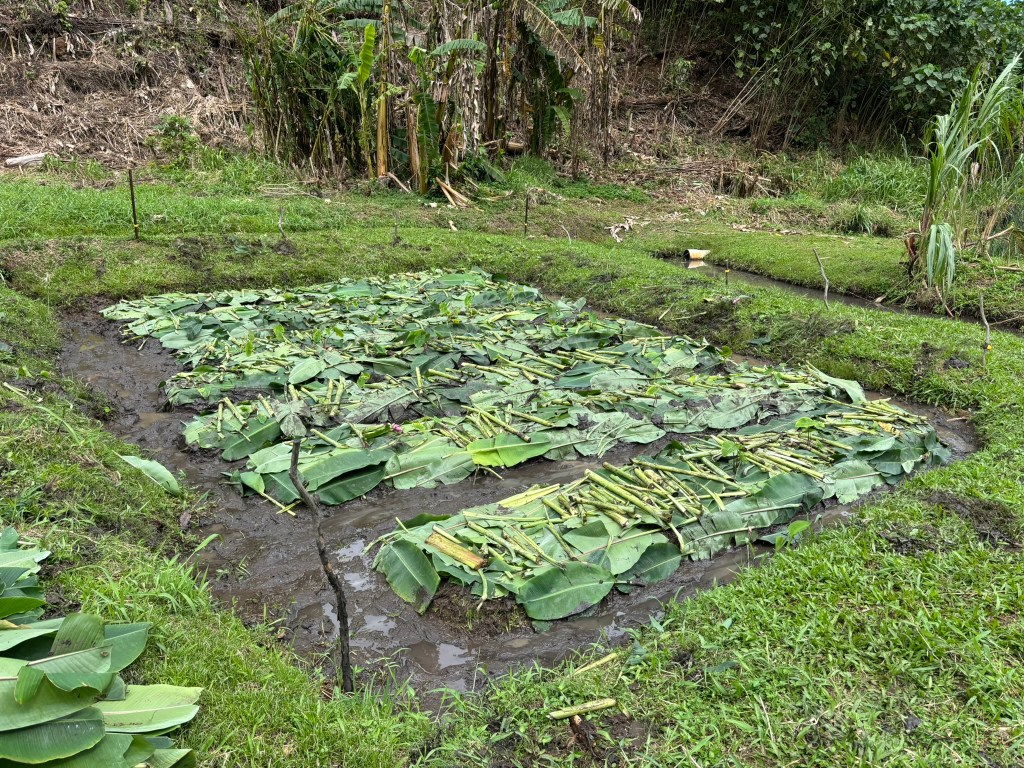
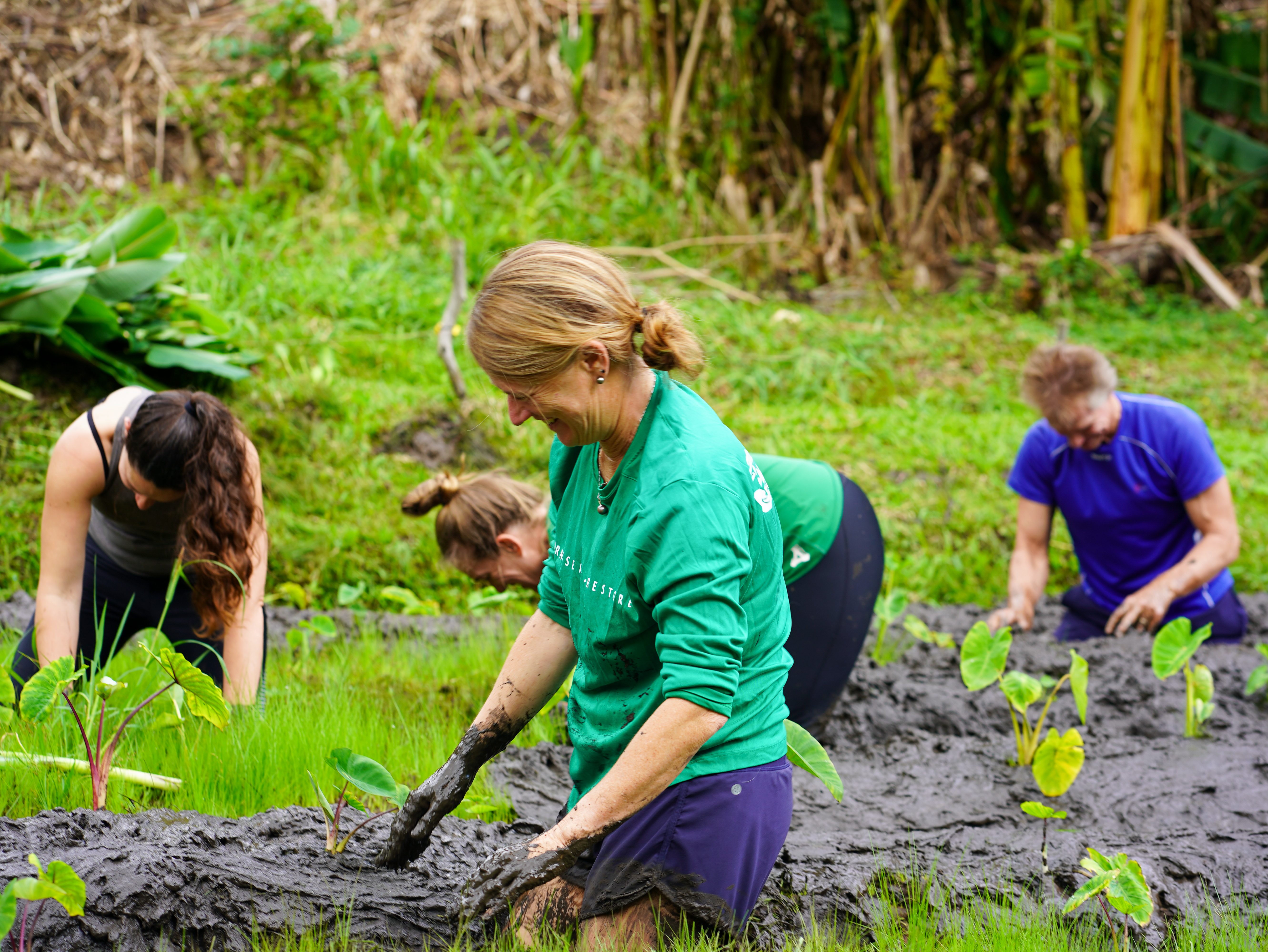
We were so grateful to spend time in the beautiful ʻāina of Papahana Kuaola on February 7 2025 for a Public Health Resonance Collaborative Knowledge Exchange. We drew much strength and solace from caring for the land and the connections, collaborations, and ideas that were nurtured in this amazing place. Mahalo nui loa to Esme Yokooji and Papahana Kuaola for this wonderful opportunity and for teaching us so much on this special day.
Learning Collaborative: Inclusion of Culturally and Regionally Relevant Physical Activity & Nutrition in Applied Public Health
We meet quarterly with public health professionals from Hawaiʻi and Alaska on best practices, wisdom, and innovation for culturally relevant physical activity & nutrition in public health surveillance, traditional practices in public health programming, and funding opportunities for applied public health. About the learning collaborative.

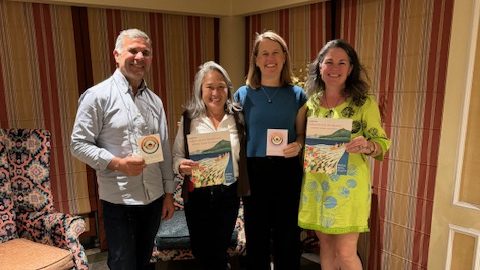
Culturally and Regionally Relevant Physical Activity Across the Globe Webinar 2025
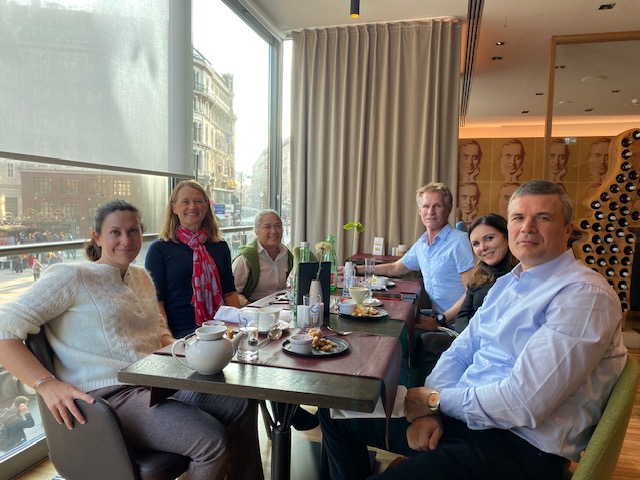
European Public Health Conference 2024
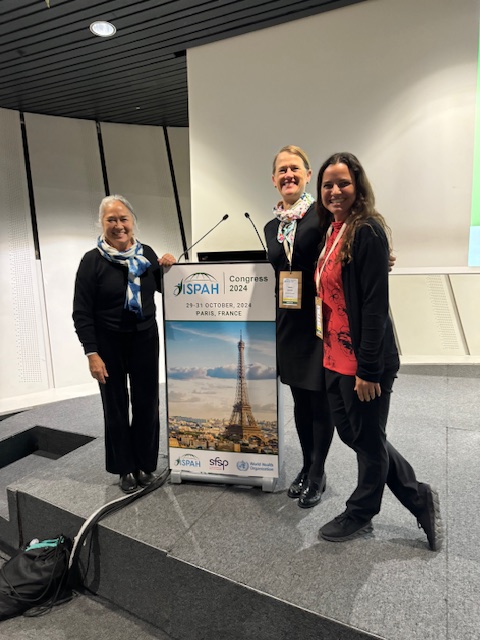
American Public Health Association 2024
Global Connections




For the public
Literature review data and protocols from this project will be shared in the Open Science Framework. OSF is a free, open platform to support research and enable collaboration. Coming soon: Heritage Physical Activity for Public Health Promotion: A Global Research Synthesis and Resource Library.

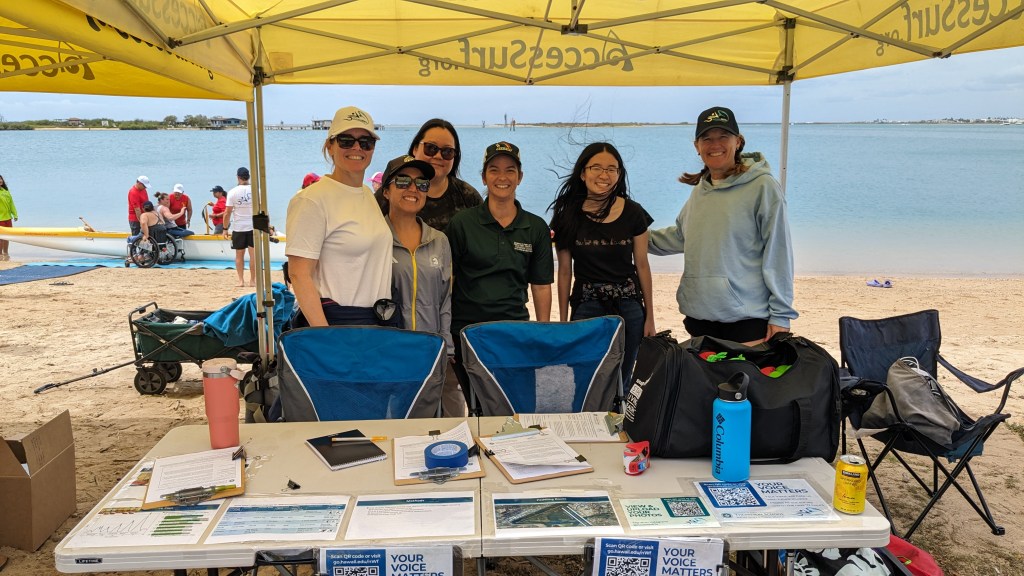
AccessMETs – Led by Dr. Simone Schmid
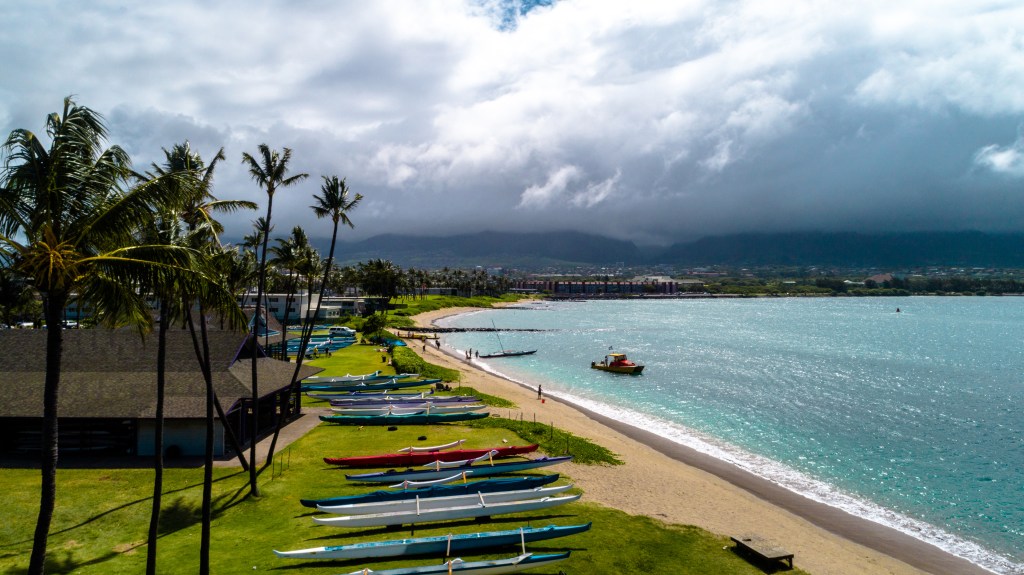
METs of Outrigger Canoe Paddling
Metabolic Equivalents of Outrigger Canoe Paddling for Health Equity: Planned Methods of an Inclusive AccessMETs Study


Spearfishing and Public Health
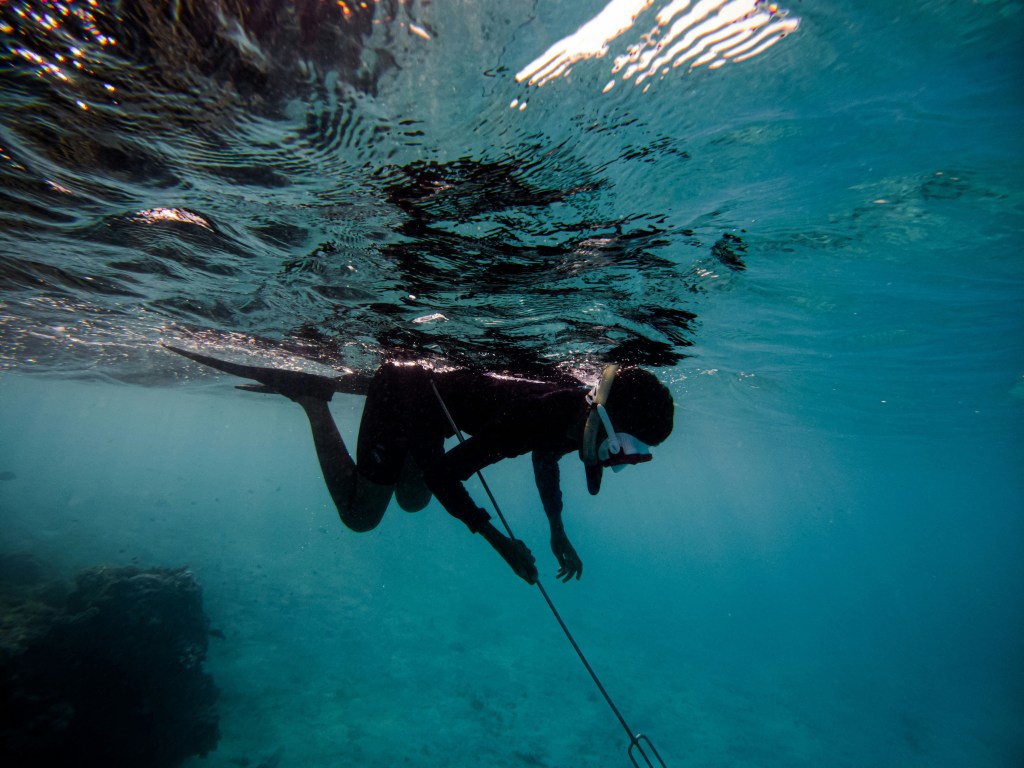
Spearfishing, a traditional practice deeply rooted in Hawaiian culture and many others across the globe, does more than provide food, it plays an important role in supporting health. This research effort is connecting benefits of this activity across physical, cultural, and other dimensions of health offering valuable insight into the practice and how it can be used to promote well-being for individuals, families, and communities.
This project is led by Lauryn Hansen, MPH, and Catherine Pirkle, PhD.
Spearfishing and public health promotion: A cross-sectional analysis of the Hawaiʻi Behavioral Risk Factor Surveillance System Survey
About the article
Authors
Lauryn Hansen, Yan Yan Wu, Tetine Lynn Sentell, Mika Thompson, Tonya Lowery St. John, Simone Schmid, Catherine McLean Pirkle
Abstract
Spearfishing, a culturally relevant practice in many locations globally, may foster physical activity and enhance well-being by promoting social cohesion, food security, and nature connectedness, but is understudied in public health promotion and surveillance. This study measured the population-level prevalence of lifetime spearfishing engagement in Hawaiʻi and identified associated factors for public health promotion. The Hawaiian Islands present an ideal setting for such activities due to its central Pacific location and a diverse population with cultural ties to spearfishing. In 2019 and 2020, lifetime spearfishing engagement was added to the Hawai’i Behavioral Risk Factor Surveillance System (N = 12,737). Prevalence ratios (PR) and 95% confidence intervals (95%CI) were estimated for spearfishing “sometimes,” “often,” or “very often” during one’s lifetime, considering sociodemographic, health behavior, and health status variables. A quarter of respondents statewide reported engagement, with higher rates amongst men (41%), Native Hawaiians (43%), other Pacific Islanders (36%), American Indian or Alaskan Native (32%), and rural island residents of Lānaʻi (51%) and Molokaʻi (43%). All age groups reported similar lifetime engagement. After statistical adjustment, those with a high school diploma or less were significantly more likely to have engaged in spearfishing than those with higher education. Spearfishing engagement was also associated with a higher likelihood of meeting physical activity guidelines (PR 1.45 95%CI 1.29-1.63). There is widespread lifelong engagement in spearfishing in Hawaiʻi, especially among Indigenous and rural populations. Supporting culturally relevant activities, such as spearfishing, is a strength-based approach to health promotion with global relevance, including encouraging physical activity.
Teamwork to Save Our Ocean: Benefits for Human Health and Well-Being
A side event at the United Nations Oceans Conference in Nice, France on June 10, 2025
About the event
Authors
Lauryn Hansen, Yan Yan Wu, Tetine Lynn Sentell, Mika Thompson, Tonya Lowery St. John, Simone Schmid, Catherine McLean Pirkle
About
The focus of this event, co-convened by a multi-continent coalition including academic, governmental, inter-governmental, and non-academic nongovernmental organizations, is to highlight and learn from successful efforts to support conservation and sustainable use of the oceans (SDG14) that have had demonstratable positive co-benefits for human health and wellbeing (SDG3) in addition to helping achieve other SDGs. This session will start with keynote presentations, followed by a broader panel discussion to consider the value, challenges, and facilitators of transdisciplinary science to help support SDG14 and SDG3.
Event Coordinating Partners
- Université Côte d’Azur
- International Atomic Energy Agency
- European Marine Board
- Centre Scientifique de Monaco
- UNESCO Chair for Sustainability of the Oceans at the University of São Paulo
- Institut de Ciències del Mar
- Institute of Marine Research (Havforskningsinstituttet)
- University of Plymouth
- University of the West Indies
- University of Hawai’i at Mānoa
- Woods Hole Oceanographic Institution
- Scripps Institution of Oceanography
- SINTEF Ocean AS; Stanford Center for Ocean Solutions
- Universiti Malaya; University of Edinburgh
- University of Alabama at Birmingham School of Public Health
- Sulubaai Environmental Foundation
- Mirpuri Foundation
- Fondation Prince Albert II de Monaco
Selected References
Sentell T, Wu YY, Look M, Gellert K, Lowery St. John T, Ching L, et al. Culturally Relevant Physical Activity in the Behavioral Risk Factor Surveillance System in Hawai‘i. Prev Chronic Dis 2023;20:220412. DOI: http://dx.doi.org/10.5888/pcd20.220412 https://www.cdc.gov/pcd/issues/2023/22_0412.htm
Policy Brief: Sentell T et al. Outrigger Canoe Paddling on Maui. The Public Health Resonance Project. Policy Brief. Published June 9, 2024.
Pirkle C, Lowery St. John T, Wu YY, Look M, Ching, Chosy EJ, Dudla S, Rodericks R, Sentell T. Adding culturally relevant physical activity to the behavioral risk factor surveillance system in Hawai‘i: Lessons Learned. Oral presentation. BRFSS Conference. April 15-18 2024.
Look M, Sentell T, Pirkle C, Irvin L. Why Culturally Relevant Physical Activity is Important for Achieving Health Equity: A Case Study from Hawai‘i. CDC Division of Nutrition, Obesity, and Physical Activity, Workshop on Culturally Relevant PA. March 5, 2024.
Schmid S, Heil D., Yoshida A., Ching L, Sentell T. Metabolic equivalents of outrigger canoe paddling for health equity. Annual Pacific Rim International Conference on Disability and Diversity, organized by the Center on Disability Studies. O’ahu, Hawai’i, USA. February 2024
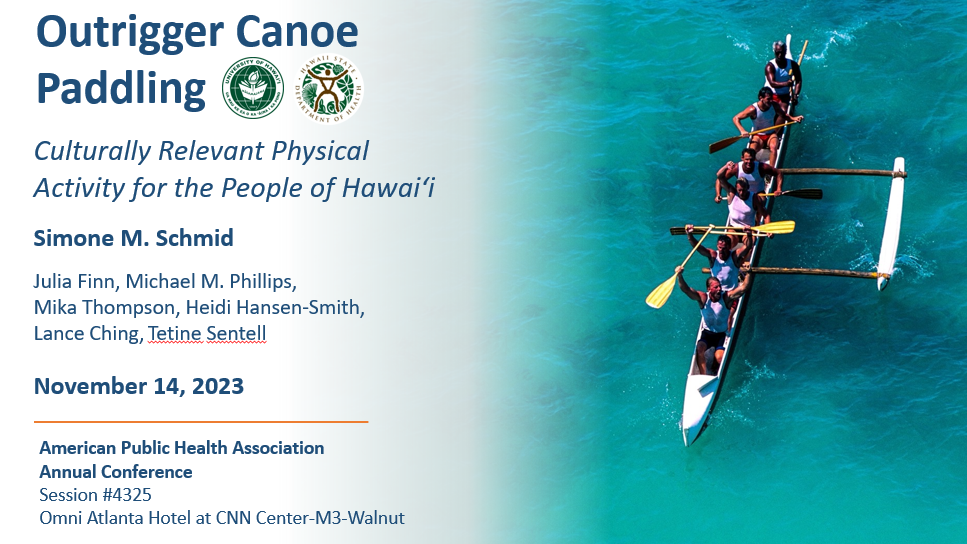
Sentell T, Thompson M, Rodericks R, Schmid S, Pirkle C, Ching L, Look M, Wu YY, Dudla S, Finn J, Phillips MM. Engagement in culturally-relevant physical activity (paddling, hula, surfing, and spearfishing) in the state of Hawai‘i over the lifecourse. American Public Health Association Conference. Atlanta, Georgia. November 2023.
Sentell T, Thompson M, Rodericks R, Schmid S, Pirkle C, Ching L, Look M, Wu YY, Finn J, Phillips MM. Culturally-Relevant Physical Activity over the lifecourse and association with chronic disease. European Public Health Conference. Dublin, Ireland. November 2023.
Sentell T, Thompson M, Philips M, Schmid S, Look M, Saiki K, Wu YY, Rodericks B, Soo Hoo C, Ching L, Yoshida A, Weldon R, Pirkle C. Surfing: A public health promotion opportunity. Poster. International Society for Physical Activity and Health Conference. Paris, France. October 28-31, 2024.
Hansen L, Pirkle C, Lowery St. John T, Ching L, Thompson M, Wu YY, Sentell T. Widespread engagement in spearfishing in Hawaiʻi – A culturally-relevant and accessible physical activity of global significance. Poster. International Society for Physical Activity and Health Conference. Paris, France. October 28-31, 2024.
Sentell T, Look M, Pirkle C, Ivin, Ylli A, Heil DP, Schmid S, Ching L, Rodericks B. Culturally relevant physical activity is important for achieving health equity: Case study from Hawai‘i. Oral presentation. Paris, France. October 28-31, 2024.
Schmid S, Soo Hoo C, Finn J, Thompson M, Phillips MM, Pirkle C, Rodericks R, Ching L, Sentell T. Culturally-relevant physical activities in comparison across levels of the social ecological model: Hula, surfing, paddling and spearfishing. American Public Health Association Conference. Minneapolis, Minnesota. (Fall 24)
Schmid S, Heil D, Yoshida A, Ching L, Funakoshi J, Kualau P, Sentell, T. Building the science for outrigger canoe paddling for paddlers with spinal cord injury as health promotion and for health equity. Oral presAccessMETs: An innovative project establishing metabolic equivalents of outrigger canoe paddling for health equity in real-life ocean conditions for those with and without spinal cord injuries. American Public Health Association Conference. Minneapolis, Minnesota. (Fall 24)

Mahalo
Thank you
This work has been partially supported by the Chin Sik & Hyun Sook Chung Endowed Chair in Public Health Studies and the Hawai‘i Department of Health, Chronic Disease Prevention and Health Promotion Division among others.
 Public Health Resonance Project